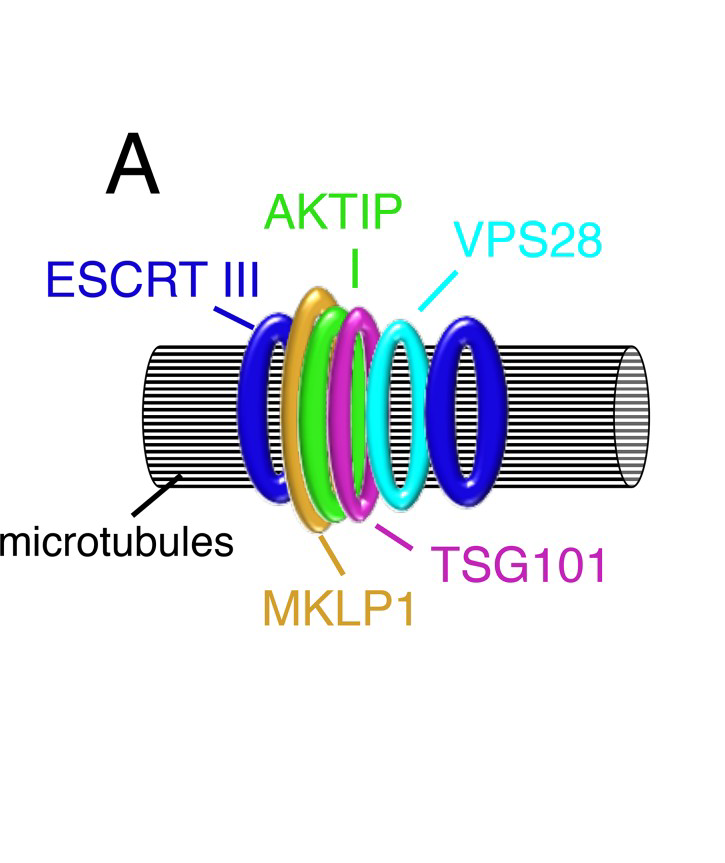
Ovulation-induced stretching of spermathecal cells leads to the recruitment of the RhoGEF RHGF-1 to stress fibers, which activates RHO-1 & myosin II in a positive feedback loop.
In this article, how mechanosensitive regulators of Rho GTPases provide epithelial tubes the ability to tune their contractility in response to internal pressure, is demonstrated. Although both active RHO-1 and calcium signaling is known to kickstart spermathecal contractility, it was not understood if RHGF-1 regulates RHO-1 activity or calcium signaling or both.
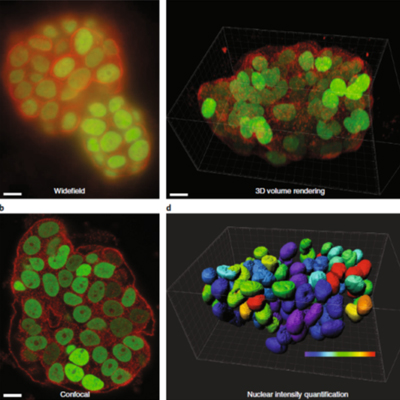
Widefield fluorescence microscopy was used to image the calcium signaling during embryo transit (RHGF-1 was crossed with a GCaMP calcium reporter). At the same time, confocal microscopy was used to study the effect of RHGF-1 on RHO-1 activity in both control and RHGF-1 (RNAi) conditions. Taken together, the results indicate that RHGF-1 is the major activator of RHO-1 in spermatheca.

Figure 2. RHGF-1 regulates the activity of RHO-1 and does not affect calcium dynamics. (F) Live imaging of spermatheca-specific RHO-1 biosensor during embryo transit through spermatheca in control and rhgf-1 conditions.
The full article can be accessed here.
1,4,5Faculty of Medicine, Tel Aviv University, Israel. 2Mechanobiology Institute, National University of Singapore, Singapore. 3Northeastern University, Boston, USA. 6Institute for Biophysical Chemistry, Hannover Medical School, Germany.